
Jinju, South Korea
Such a white curved building stands out from the other Jinju Silk buildings and it represents Korean silk to the public.
jinju silk museum
culture architecture
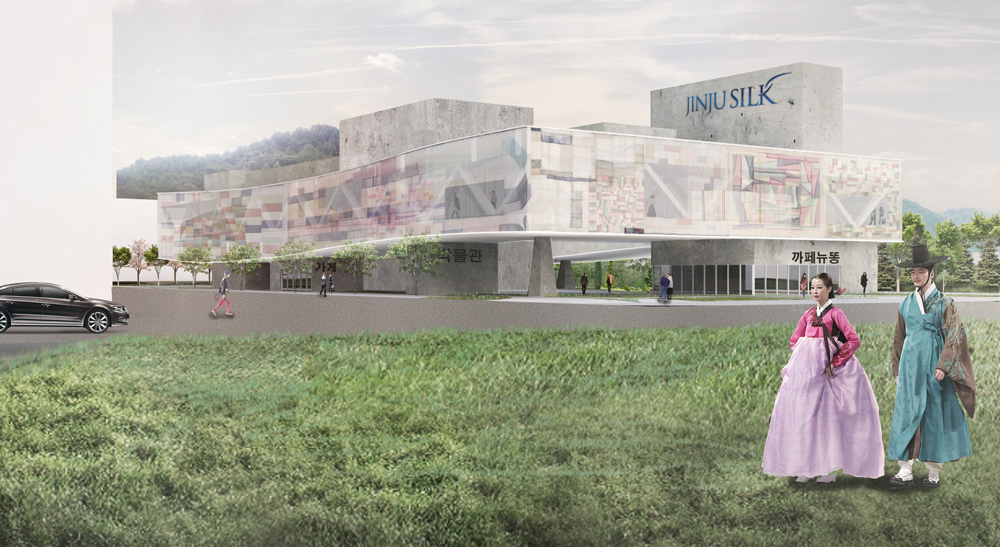
Floating Silk has been planned on the premise that it is symbolic of the future development of the silk industry along with the tradition of Jinju City and the history of regional economic development. It is a Jinju Silk museum, including an education facility, on the territory adjacent to all the Jinju silk office buildings and production halls in the city of Jinju, South Korea.
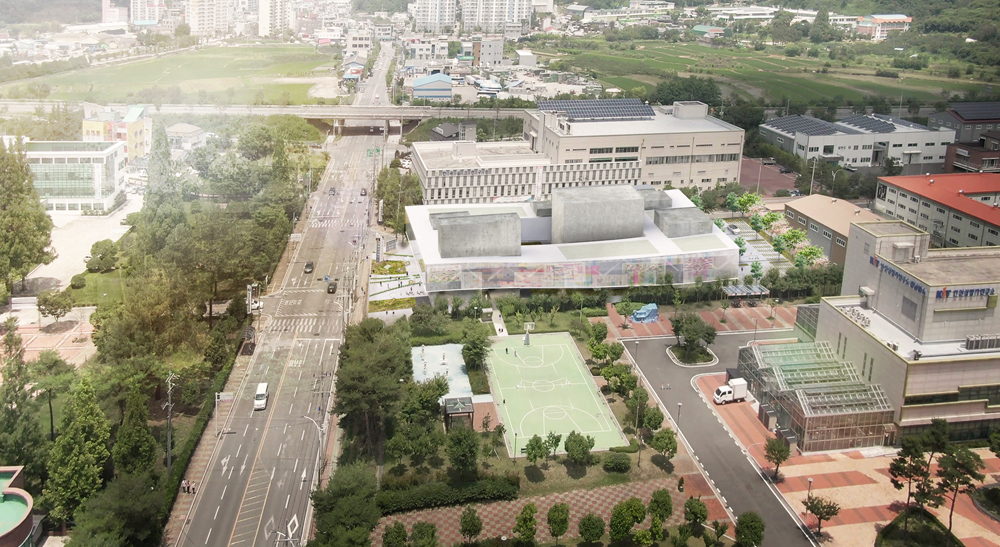
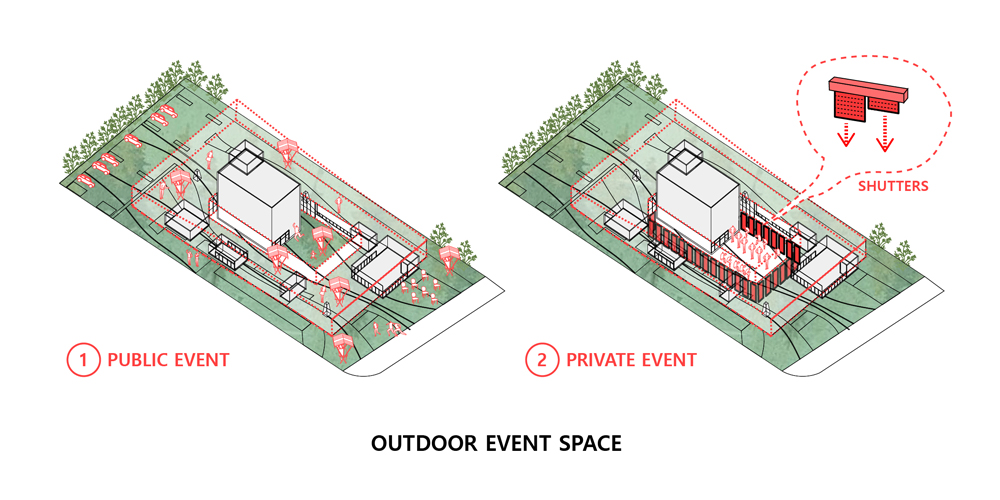
There are outdoor events held outside this museum, such as fashion shows, markets, and exhibitions. Hence, there is a request for a nice outdoor space of 2,400 m2 to be able to hold these events.
The idea of eventually having the outdoor space on the ground is to attract the people at eye level when an event is taking place.
This leads to lifting the museum block, which also made sense conceptually since this floating white silk block should be an eye-catcher from the adjacent highways from the city center of Jinju. Such a white curved building stands out from the other Jinju Silk buildings and it represents Korean silk to the public.
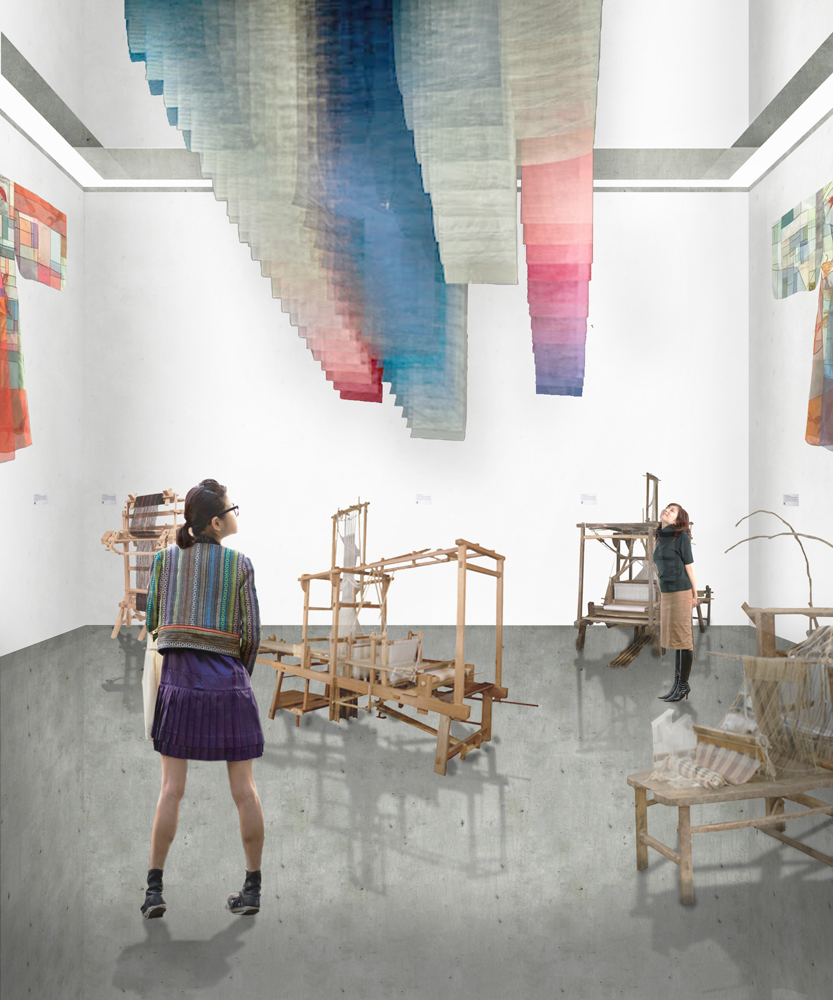
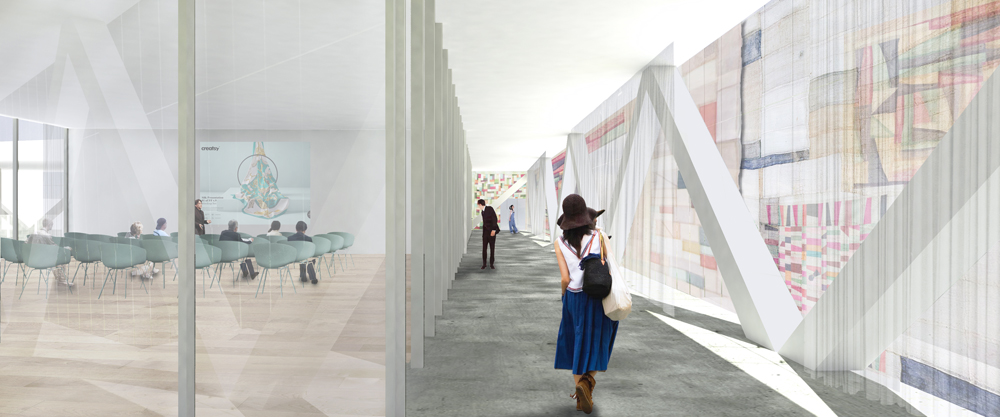
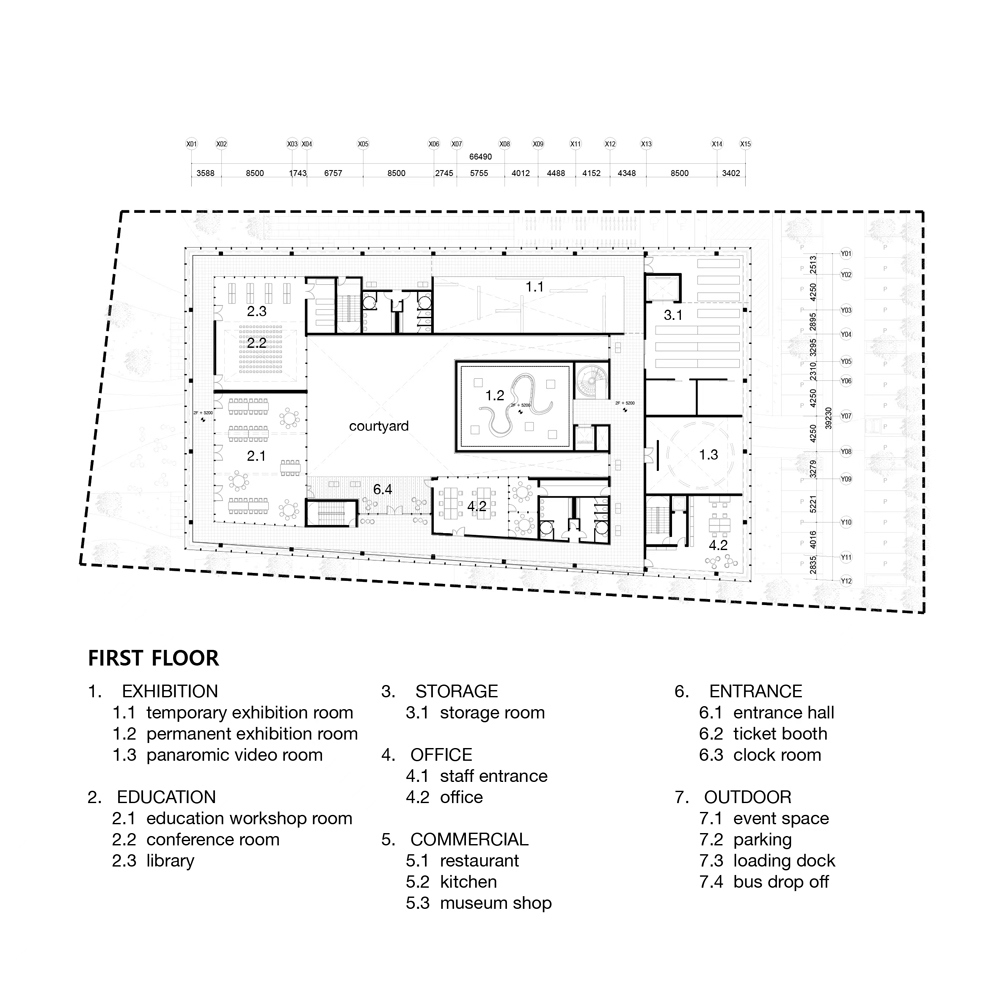
The design is like a strong magnet that attracts people to the heart, the courtyard of the museum. The people around the building are also able to enjoy the beauty of Jinju’s silk since the glass facades are like window displays with three layers of different types of silks and patterns behind. The layers are positioned to create the Korean traditional patchwork of silk, Bojagi. Remember, this environment is about Jinju Silk. In the floating white block, where the exhibitions, education facilities, and back office are located, a visitor can experience the silk layers in the corridors of the building. In some indoor spaces in the building, the peek-a-boo glass openings are oriented towards the courtyard to let the visitors also enjoy the outdoor events that take place below.

 TAKE U CHI+M