
Shanghai, China
Users can accordingly alter the form of multi-bookshelves by either compacting or forming linear combinations
book lounge
interior design
Digitalization has been cultivating the habit of fragmented reading and writing; digital devices have become prominent players in how individuals connect with the world. Is there a dimension at which we can benefit from the convenience brought by digital intelligence driven self-service and also from the sensory experience through reading paper books and socializing face to face?
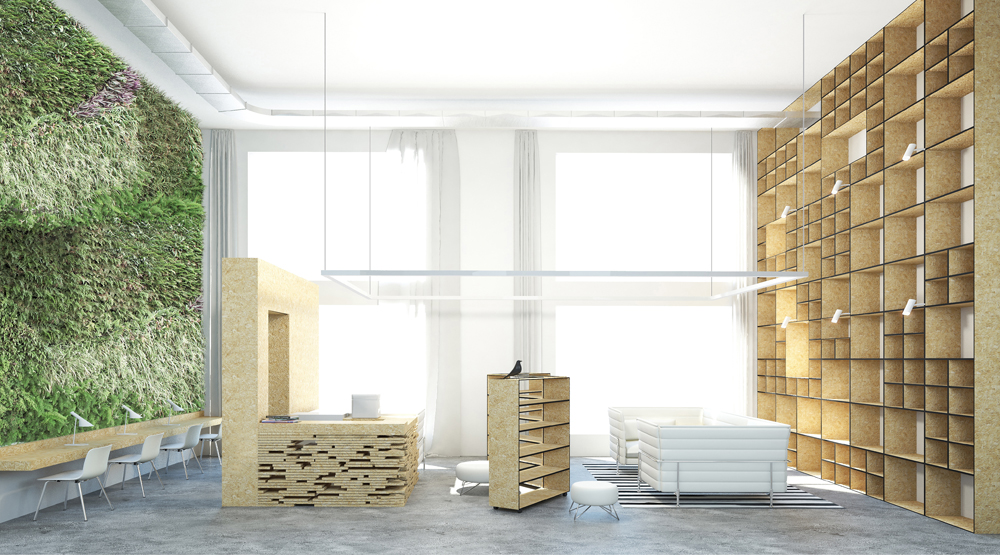
BIB篳簿 is a casual space nestled in the middle story of a skyscraper, offering a timely escape for the white collars working in-house. Being part of the Micro-Self-Service-Library plan for the city, The BIB is a small but daring attempt to test how to accommodate various activities within a freely convertible micro space furnished with advanced (multimedia) technologies. Visitors can enjoy from reading and lounging to networking at small-scale workshops. Through the Micro-Self-Service-Library plan, together with our client, we seek to build up an array of such micro book cafés and blend them into highly urban settings, enticing individuals to engage more with reading and in-person communication.
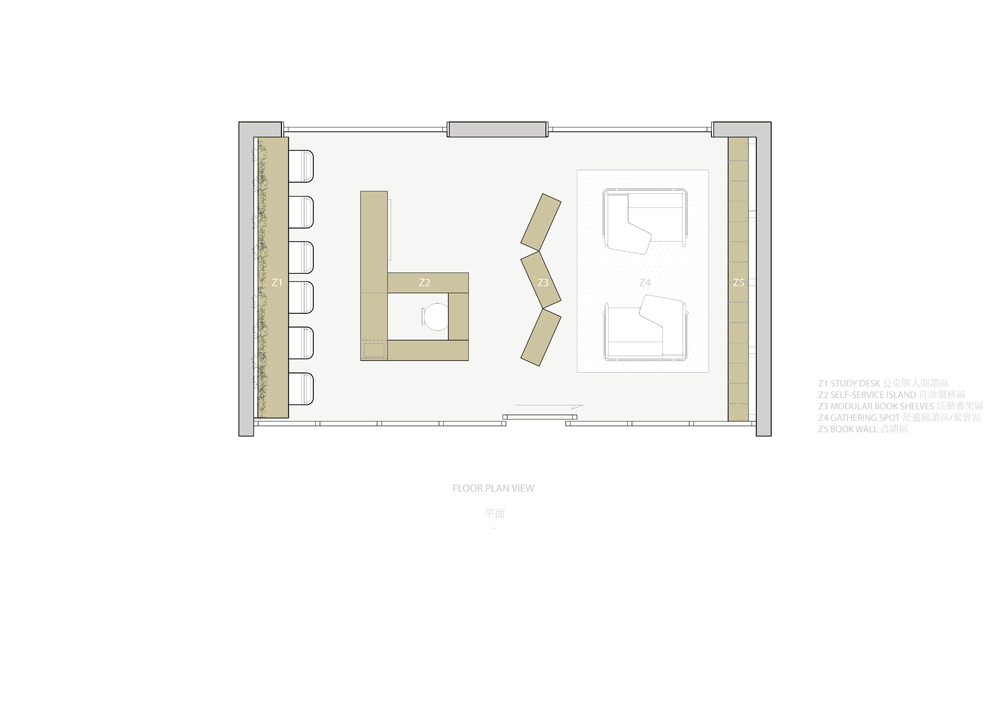
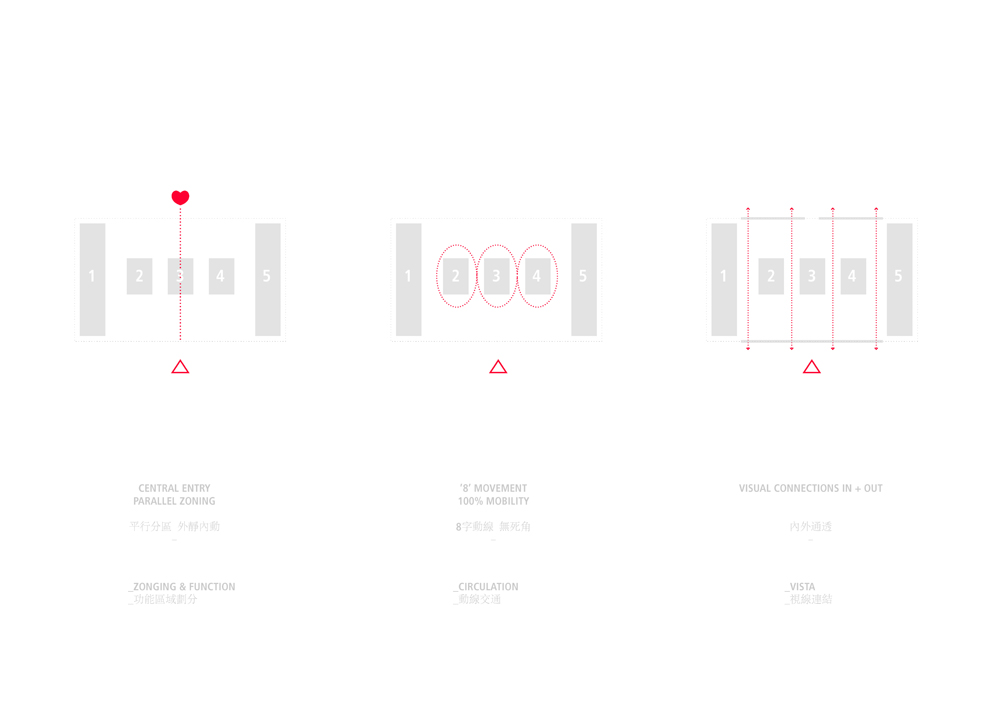
None or very few personnel would be staffed as all is self-service. In enabling an ideal movement of users in such a small space, we fascinated a flexible layout with three functional zones located in the center, while passage ways around those zones are all interconnected, thus creating a fluent ‘8’ form flow, completing an uninterrupted circulation. Meanwhile, this particular layout also uplifts spatial openness and maximizes visual connection between inside of the building and outside city skyline, creating both mind and visual escape that a book café designates.
We designed a modular bookshelf system for the interior. A single-wheeled chipboard bookshelf measures 800 mmX1500 mmX300 mm respectively in width, height, and depth. Two rail-and-lock systems on the upper and lower sides are mounted on both sides of a modular bookshelf. Users can accordingly alter the form of multi-bookshelves by either compacting or forming linear combinations so to counteract a different space for usage. In such a way, books are well demonstrated without limiting the potential of space.

 TAKE U CHI+M